
Stock Market Strategy : Why Are ONGC Shares Falling? Market Analysis and Future Outlook ?
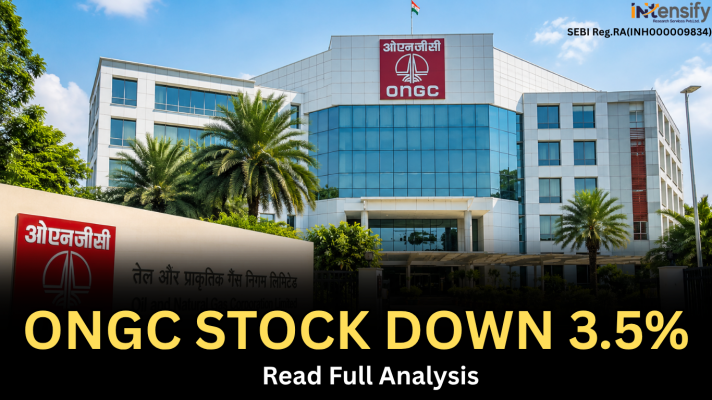
ONGC Shares Decline Amid Profit Booking: Key Reasons Behind the Stock Movement
Oil and Natural Gas Corporation (ONGC), one of India's leading energy companies, witnessed selling pressure as investors booked profits following recent gains. The decline in the stock reflected cautious market sentiment, with broader weakness across benchmark indices also contributing to the downward movement.
Although ONGC remains a fundamentally strong public sector enterprise with a significant presence in India's oil and gas industry, short-term market volatility influenced investor sentiment during the trading session.
Why Did ONGC Shares Fall?
Several factors contributed to the weakness in ONGC's share price:
1. Profit Booking
After a period of positive momentum, many investors chose to lock in profits, leading to increased selling pressure. Profit booking is a common occurrence after stocks experience sustained gains.
2. Weak Overall Market Sentiment
The broader Indian equity market traded lower as investors reacted to global uncertainties, rising crude oil prices, and cautious sentiment ahead of corporate earnings. Large-cap stocks, including ONGC, were affected by this market-wide selling.
3. Volatility in Crude Oil Prices
Although higher crude oil prices can support upstream energy companies like ONGC, sudden fluctuations often create uncertainty about future demand, production costs, and government policies. This uncertainty can increase volatility in energy stocks.
4. Foreign Investor Activity
Foreign Institutional Investors (FIIs) remained cautious amid global economic concerns, resulting in reduced exposure to several large-cap stocks, including those in the energy sector.
>>>Get advanced Stock Cash Tips & Strategy - SIGN UP Now!
Impact on the Energy Sector
ONGC's decline reflected broader caution in the oil and gas sector. Investors closely monitored developments in global energy markets, crude oil prices, geopolitical events, and government policy announcements, all of which can significantly influence the performance of energy companies.
Despite short-term weakness, analysts continue to view India's energy sector as strategically important due to rising domestic energy demand and ongoing investments in exploration and production.
What Should Investors Watch?
Investors tracking ONGC should monitor:
* Global crude oil price trends
* Quarterly financial results
* Production and exploration updates
* Government policy changes affecting the oil and gas sector
* FII and DII investment activity
* Overall market sentiment
Long-Term Outlook
ONGC remains one of India's largest integrated energy companies with diversified operations across exploration, production, refining, and natural gas. While short-term price fluctuations are influenced by market sentiment and external factors, long-term investors often focus on the company's financial performance, dividend history, production growth, and strategic expansion plans.
Conclusion
The recent decline in ONGC shares highlights the impact of profit booking and broader market weakness on large-cap energy stocks. While short-term volatility may continue, investors should evaluate ONGC based on its business fundamentals, earnings growth, and long-term prospects rather than daily price movements.
Level up your investing game. Get an advanced Stock Market Strategy. Register now - www.intensifyresearch.com or WhatsApp - 8109935050
Investment in the securities market is subject to market risk