
Stock Market Strategy: Oil Prices Rise 8% - What Triggered the Sharp Rally?
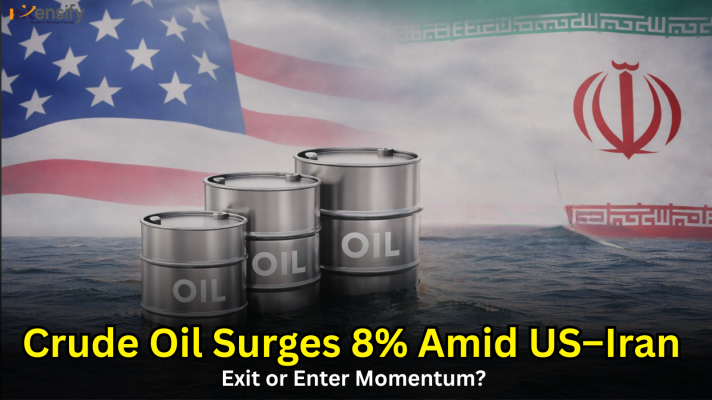
Oil Just Spiked Again - But This Time It Feels Different:
Oil just spiked over 8%, and for India, that’s bad news. Higher crude means rising import costs, pressure on the rupee, and fresh inflation worries -all of which can drag the stock market and keep sentiment nervous in the near term. The Indian stock market is likely to stay volatile with downside pressure if oil remains elevated.
>>>Get advanced Stock Cash Tips & Strategy - SIGN UP Now!
Why This Spike Isn’t Just Another Price Move?
- This spike isn’t driven by real shortage yet - it’s fear and uncertainty pushing prices higher.
- Nearly 20% of global oil flows through this route, so any disruption here can shake the entire market.
- US blockade signals and Iran’s retaliation warnings are increasing chances of conflict.
- Traders are reacting in advance, pushing oil up sharply before any actual supply disruption happens.
Where Are Prices Headed Next?
- Oil prices now depend completely on how the US-Iran situation unfolds, not just market fundamentals.
- If tensions continue, prices may stay above $100 and move toward $110–$115 due to ongoing fear and risk premium.
- If conflict escalates, any major disruption like attacks or blockades could push oil toward $150+ and trigger global economic stress.
- If diplomacy returns, prices could fall quickly, though this scenario currently looks unlikely.
What This Means for You (Not Just Markets):
This isn’t just a trader’s problem.
- Petrol and diesel prices → likely to rise
- Inflation → could heat up again
- Stock markets → may stay volatile
- Rupee → already under pressure due to oil surge
Is This the Start of a Bigger Rally?
- Rising crude oil prices increase import costs for India, putting pressure on the economy and markets
- Benchmark indices like Nifty 50 and Sensex tend to face downward pressure during sharp oil spikes
- Oil Marketing Companies (OMCs) like Indian Oil Corporation and Bharat Petroleum see margin pressure due to higher crude costs
- Overall sentiment becomes volatile and cautious, with sector-wise divergence in the market
Short-Term Traders:
- High volatility in Nifty 50 and Sensex - trade quick moves based on crude oil price swings
- Focus on sector-based trades: bullish on upstream like ONGC, bearish on OMCs & aviation
- Track global news triggers (US–Iran tensions, dollar index, crude levels) for entry/exit
- Use tight stop-loss & short holding periods - avoid overnight risk due to sudden global developments
Long-Term Investors:
- Ignore short-term oil spikes, focus on long-term growth of Nifty 50 companies
- Use market dips as buying opportunities in strong sectors like banking, infra, and FMCG
- Monitor inflation & policy actions by Reserve Bank of India, as they affect long-term returns
- Stay diversified - balance exposure across sectors to manage oil-driven risks in the economy
Conclusion:
Rising crude oil prices increase import costs, weaken the rupee, and create inflation pressure, which negatively impacts indices like Nifty 50 and Sensex. This leads to higher volatility in the Indian stock market, sector-wise pressure (especially on OMCs and aviation), and cautious sentiment, while policy moves by Reserve Bank of India remain key for market direction.
If you want daily trade setups, market insights and structured Stock Market Strategy, explore our premium services and stay ahead of the crowd.
Level up your investing game. Get an advanced Stock Market Strategy. Register now - www.intensifyresearch.com or WhatsApp - 9584109182
Investment in the securities market is subject to market risks

