
Stock Market Strategy: Paytm Payment Bank Share Sinks 8% - Should Investors Be Worried?
Paytm Falls 8% - Panic Button or Patient Investor’s Opportunity?
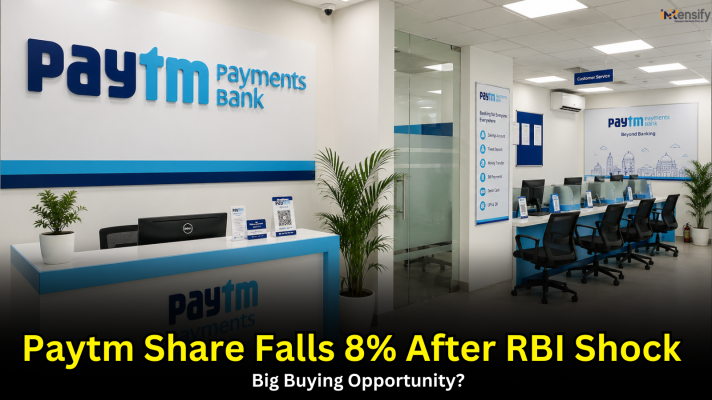
Paytm Payments Bank came under pressure after action by the Reserve Bank of India, leading to an 8?ll in Paytm stock and briefly impacting sentiment across the Indian stock market, including indices like NIFTY 50 and BSE Sensex, highlighting how regulatory moves can quickly influence investor confidence.
>>>Get advanced Stock Cash Tips & Strategy - SIGN UP Now!
What Actually Happened?
- Markets often ignore early warning signs, but once a decision becomes official, reaction becomes immediate and aggressive
- Stock markets don’t move on “expectations” alone - they react sharply when uncertainty turns into confirmed risk
- The result was a sharp fall in Paytm stock price within hours, not because the entire business collapsed, but because confidence dropped suddenly
- The impact wasn’t isolated - sentiment slightly weakened across the Indian stock market, including indices like NIFTY 50 and BSE Sensex
For Long-Term Investors:
- India’s structural growth story (digital payments, fintech adoption) remains strong
- One action by the Reserve Bank of India does not break the entire sector
- Paytm still has core businesses beyond Payments Bank (QR ecosystem, merchant network, lending partnerships)
- Short-term volatility is normal long-term wealth is built by holding through uncertainty
For Short-Term Traders:
- This phase is driven by news, fear and volatility - not logic
- Price movements can be sharp and unpredictable (both up and down)
- High risk of fake recoveries (dead cat bounce)
- In such situations, capital protection > profit chasing
For Opportunistic Buyers:
- Big opportunities come when markets overreact to news instead of facts - and situations like the one involving Paytm are classic examples
- Most retail investors sell in panic, while experienced investors start preparing a watchlist instead of buying immediately
- Track Broader Market through indices like NIFTY 50 and BSE Sensex - if the overall market is strong, recovery chances improve
- Entry should not be emotional - it should be planned and staggered (SIP-style buying)
So, Buy, Sell, or Hold?
- Sell (for short-term traders): Volatility is far from over. News-driven swings can continue and timing matters more than conviction here.
- Hold (for existing investors): Panic selling often locks in losses. The broader business hasn’t disappeared overnight.
- Buy (for high-risk, long-term investors): It may look “cheap,” but cheap doesn’t always mean value. Only step in if you truly believe in the long-term story and management’s ability to rebuild trust.
Conclusion:
Paytm Payments Bank has highlighted how regulatory actions by the Reserve Bank of India can trigger sharp sentiment shifts in the Indian stock market, where even indices like NIFTY 50 and BSE Sensex may feel short-term pressure, but such events rarely change the country’s long-term growth story, reminding investors that while news drives volatility, disciplined and patient decision-making is what ultimately builds wealth.
If you want daily trade setups, market insights and structured Stock Market Strategy, explore our premium services and stay ahead of the crowd.
Level up your investing game. Get an advanced Stock Market Strategy. Register now - www.intensifyresearch.com or WhatsApp - 9584109182
Investment in the securities market is subject to market risks

